
Advancing Early Dementia Detection Through AI
AI Sleep Analysis Linked to Higher Dementia Risk
Researchers use machine learning to calculate 'brain age' from EEG data, finding strong links to cognitive decline.
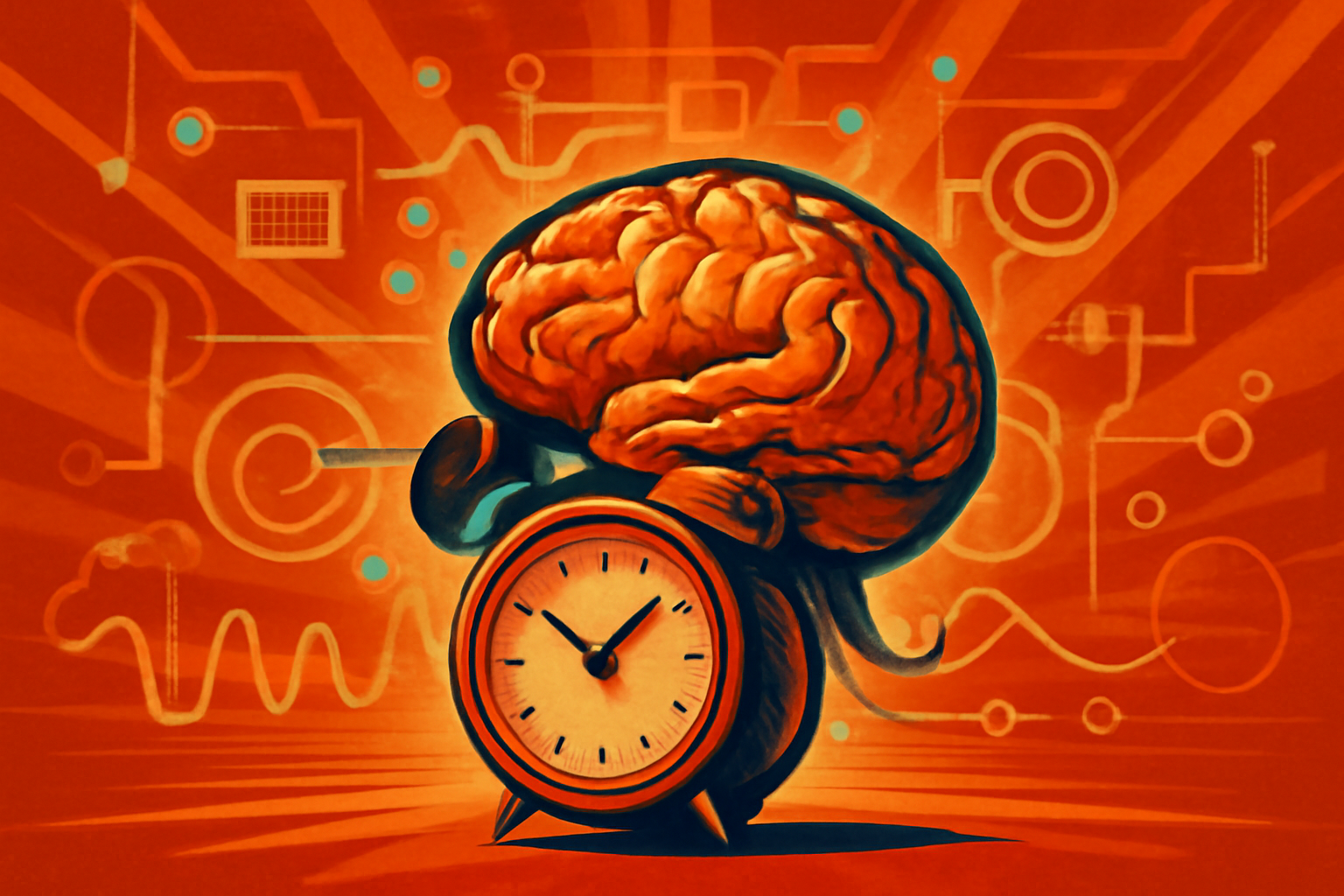
A digital visualization of a human brain with glowing neural networks over a person sleeping, representing AI analysis of sleep EEG data.
Photo: Kronos Digital News
Researchers from UC San Francisco and Beth Israel Deaconess Medical Center developed a machine-learning model to evaluate brain health through sleep patterns [1]. By analyzing EEG recordings from 7,000 adults, the system estimates an individual's "brain age" based on neural activity [2].
The study reveals a significant connection between sleep-derived brain age and health outcomes. Findings show every 10 years of "brain aging" beyond actual age correlates with a 40% higher dementia risk [1][3].
This deep-learning biomarker offers a new way to monitor cognitive health and mortality risks [3]. Scientists believe these non-invasive sleep tests could lead to earlier detection of neurological diseases [2].
Editorial notes
Transparency note
AI assisted drafting. Human edited and reviewed.
- AI assisted
- Yes
- Human review
- Yes
- Last updated
Risk assessment
Reviewed for sourcing quality and editorial consistency.
Sources
- 1.↗
sciencedaily.com
https://www.sciencedaily.com/releases/2026/07/260729051540.htm
- 2.↗
pmc.ncbi.nlm.nih.gov
https://pmc.ncbi.nlm.nih.gov/articles/PMC13003368/
- 3.↗
researchgate.net
https://www.researchgate.net/publication/401273393_Brain_Health_from_Sleep_EEG_A_Multicohort_Deep_Learning_Biomarker_for_Cognition_Disease_and_Mortality
Related stories
View all
Topics
About the author
Kronos Digital News Desk covers advancing early dementia detection through ai and editorial analysis for Kronos Digital News.