
Visual Data Enhances Medical Records
AI Smart Glasses Boost Clinical Accuracy to 98%
A Flinders University study reveals how vision-enabled AI scribes reduce errors by seeing medication labels.
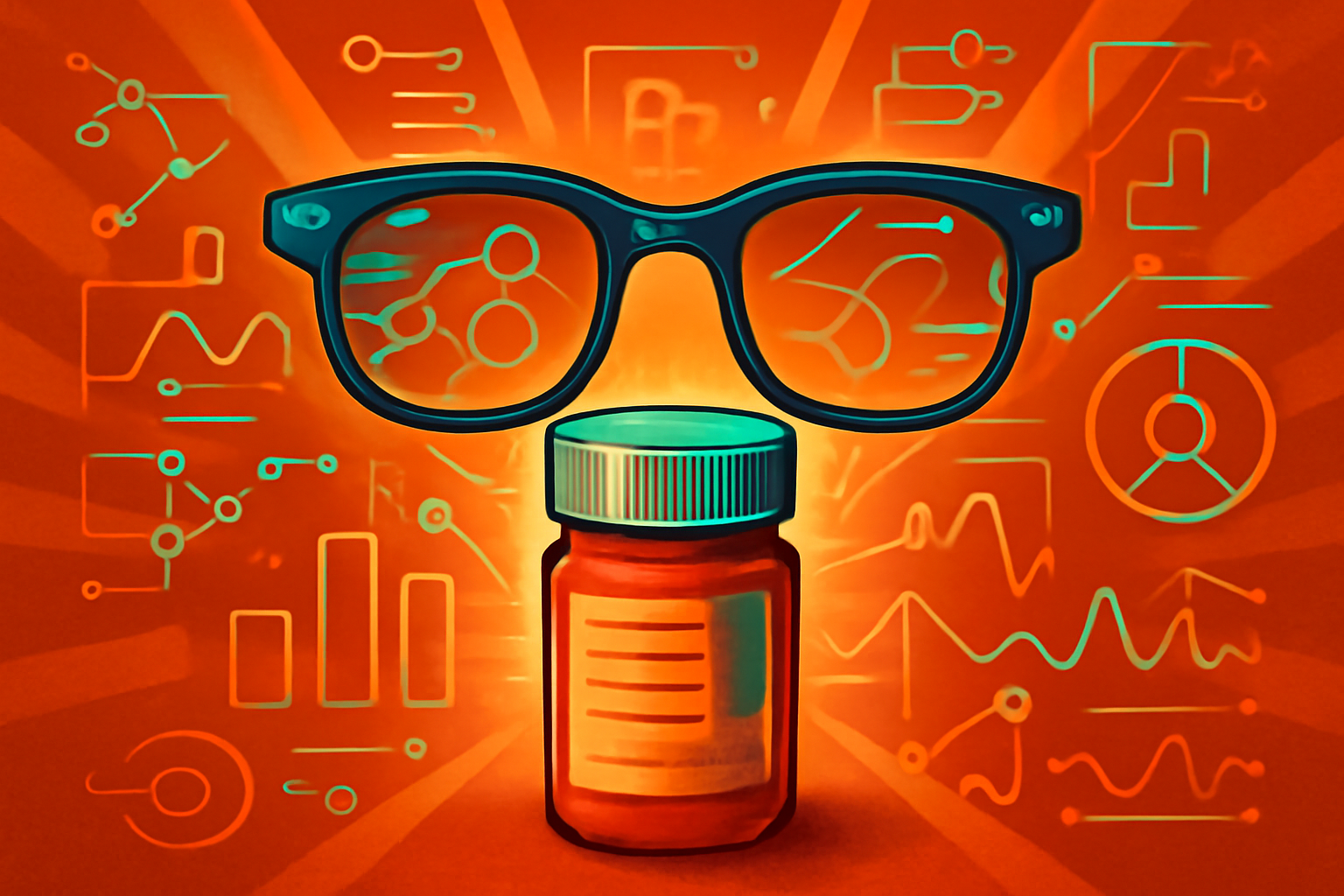
A doctor in a white lab coat wearing smart glasses and examining a prescription medication bottle in a clinical setting.
Photo: Kronos Digital News
Researchers at Flinders University have developed a new vision-enabled AI scribe system [1]. This technology combines Google’s Gemini AI with Ray-Ban Meta smart glasses [1][2]. The study found that the system achieved 98% accuracy in clinical documentation [1]. By seeing medication containers, the AI captured details often missed in verbal conversations [2]. The findings were published in the journal npj Digital Medicine [1]. This integration helps doctors record precise medication histories during patient visits [1][2]. The AI "eyes" allow for better tracking of dosage and brand names [2]. This leap in technology could significantly reduce human error in medical records [1].
Editorial notes
Transparency note
Drafted with LLM; human-edited
- AI assisted
- Yes
- Human review
- Yes
- Last updated
Risk assessment
The source list contains only two independent domains, which is below the recommended threshold of three.
Sources
- 1.↗
news.flinders.edu.au
https://news.flinders.edu.au/blog/2026/03/19/the-next-leap-for-ai-scribes-provides-eyes-in-the-clinic/
- 2.↗
researchgate.net
https://www.researchgate.net/publication/401260440_Vision-Enabled_AI_scribes_reduce_omissions_in_clinical_conversations_evidence_from_simulated_medication_histories
Related stories
View all


Topics
About the author
Kronos Digital News Desk covers visual data enhances medical records and editorial analysis for Kronos Digital News.