
Improving Diagnostic Accuracy with AIDD
AI Tool Distinguishes Dementia Types With High Accuracy
University of Florida researchers develop AIDD to differentiate Alzheimer's and Lewy Body Dementia via MRI.
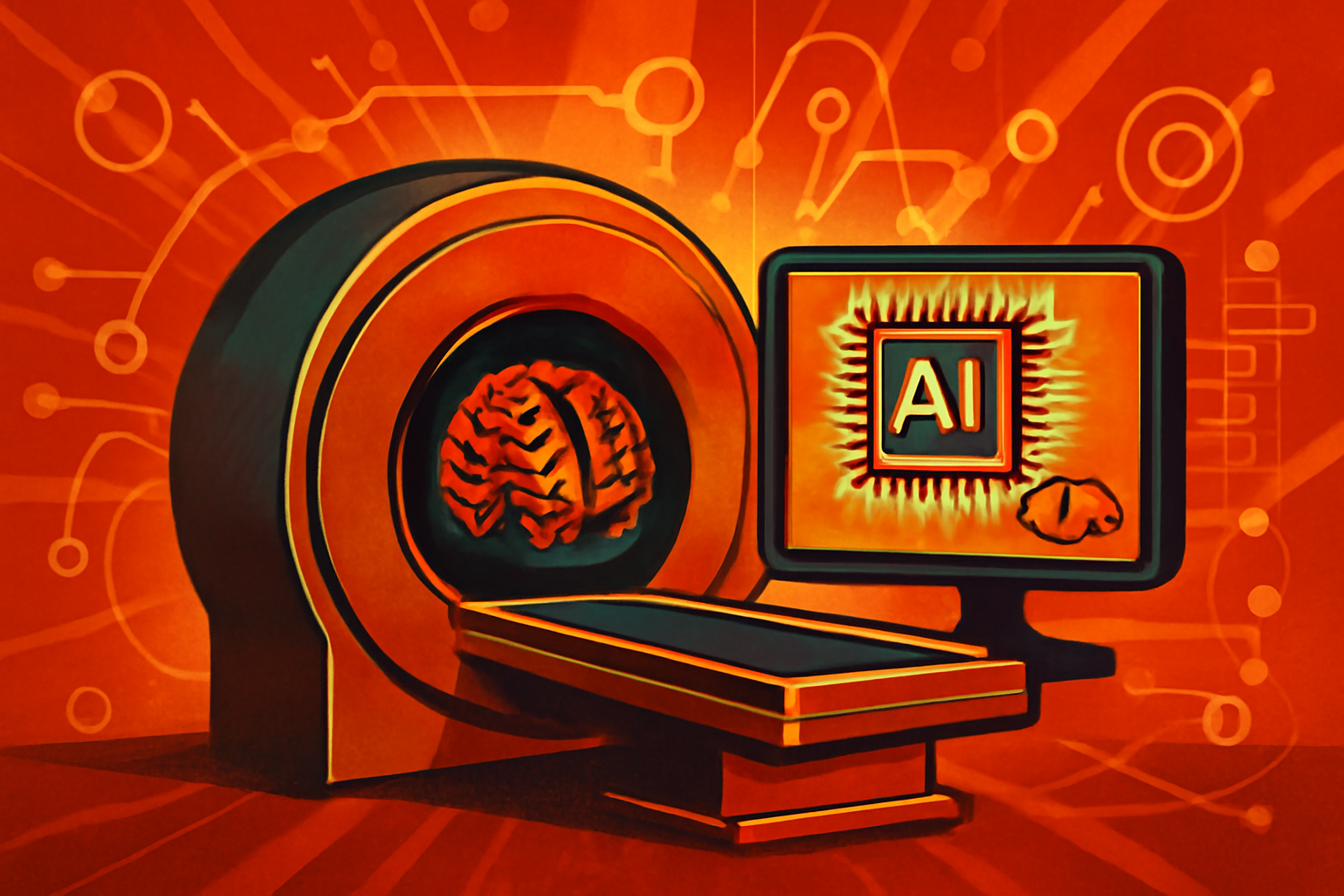
A 3D digital rendering of a human brain scan on a medical display, featuring translucent blue neural network overlays signifying AI diagnostic analysis.
Photo: Kronos Digital News
Researchers at the University of Florida developed a diagnostic tool named Automated Imaging Differentiation for Dementia (AIDD) [1]. The system uses specialized MRI scans and machine learning to distinguish Alzheimer's disease from Lewy body dementia [1][2]. These two neurodegenerative conditions are frequently confused during clinical diagnosis due to overlapping symptoms [2].
The AI tool demonstrates near-perfect accuracy in identifying specific brain patterns associated with each disease [1]. This breakthrough builds on years of research into the potential for artificial intelligence to predict dementia onset [3]. Scientists believe this tool will significantly improve treatment planning by ensuring patients receive the correct diagnosis early [2].
Editorial notes
Transparency note
AI assisted drafting. Human edited and reviewed.
- AI assisted
- Yes
- Human review
- Yes
- Last updated
Risk assessment
Reviewed for sourcing quality and editorial consistency.
Sources
Related stories
View all
Topics
About the author
Kronos Digital News Desk covers improving diagnostic accuracy with aidd and editorial analysis for Kronos Digital News.