
Accelerating the Engineering Cycle with AI
MIT Students Design Jet Engine Using AI Copilots
The JARVIS Challenge shows how frontier AI speeds up the design-build-test cycle for safety-critical hardware.
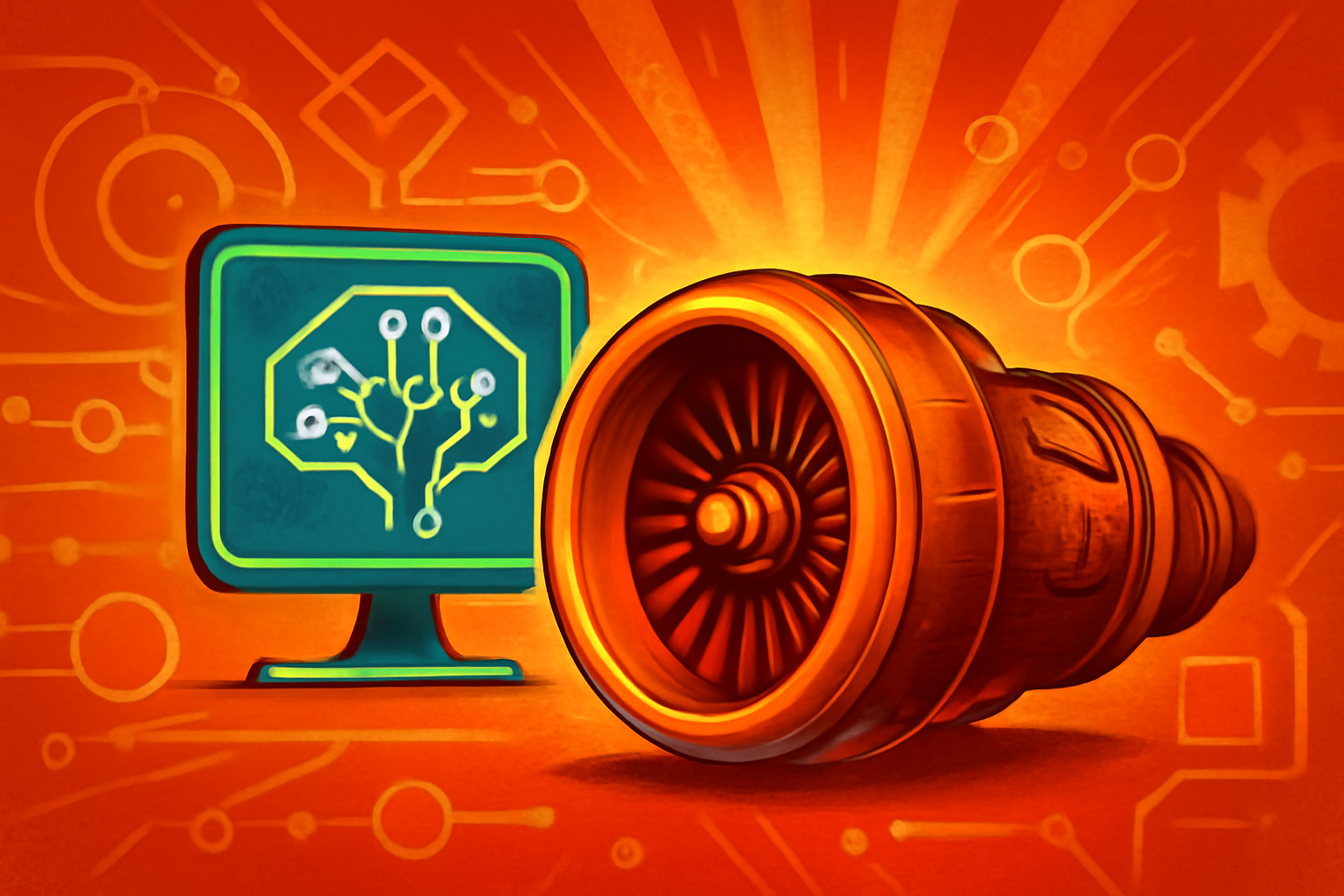
MIT students in a laboratory working on a small gas turbine jet engine with digital engineering data visible on nearby screens.
Photo: Kronos Digital News
MIT students recently completed the JARVIS Challenge by successfully designing, building, and testing a small gas turbine engine [1][3]. The project utilized frontier AI copilots to assist in the complex engineering process [1]. This experiment aimed to determine if artificial intelligence could handle the rigorous demands of safety-critical hardware [1].
The challenge demonstrated that AI tools can significantly accelerate the design-build-test cycle [1]. While the AI provided technical support, the students relied on human engineering judgment for final decisions and safety protocols [1]. This collaboration suggests a new model for tough-tech development where AI acts as a specialized assistant for engineers [1][3].
Editorial notes
Transparency note
AI assisted drafting. Human edited and reviewed.
- AI assisted
- Yes
- Human review
- Yes
- Last updated
Risk assessment
Reviewed for sourcing quality and editorial consistency.
Sources
Related stories
View all


Topics
About the author
Kronos Digital News Desk covers accelerating the engineering cycle with ai and editorial analysis for Kronos Digital News.