
Advancing Deep-Space Machine Learning
NASA Integrates AI Into Roman Space Telescope
New machine learning tools will process cosmic data in real time to identify rare astronomical events.
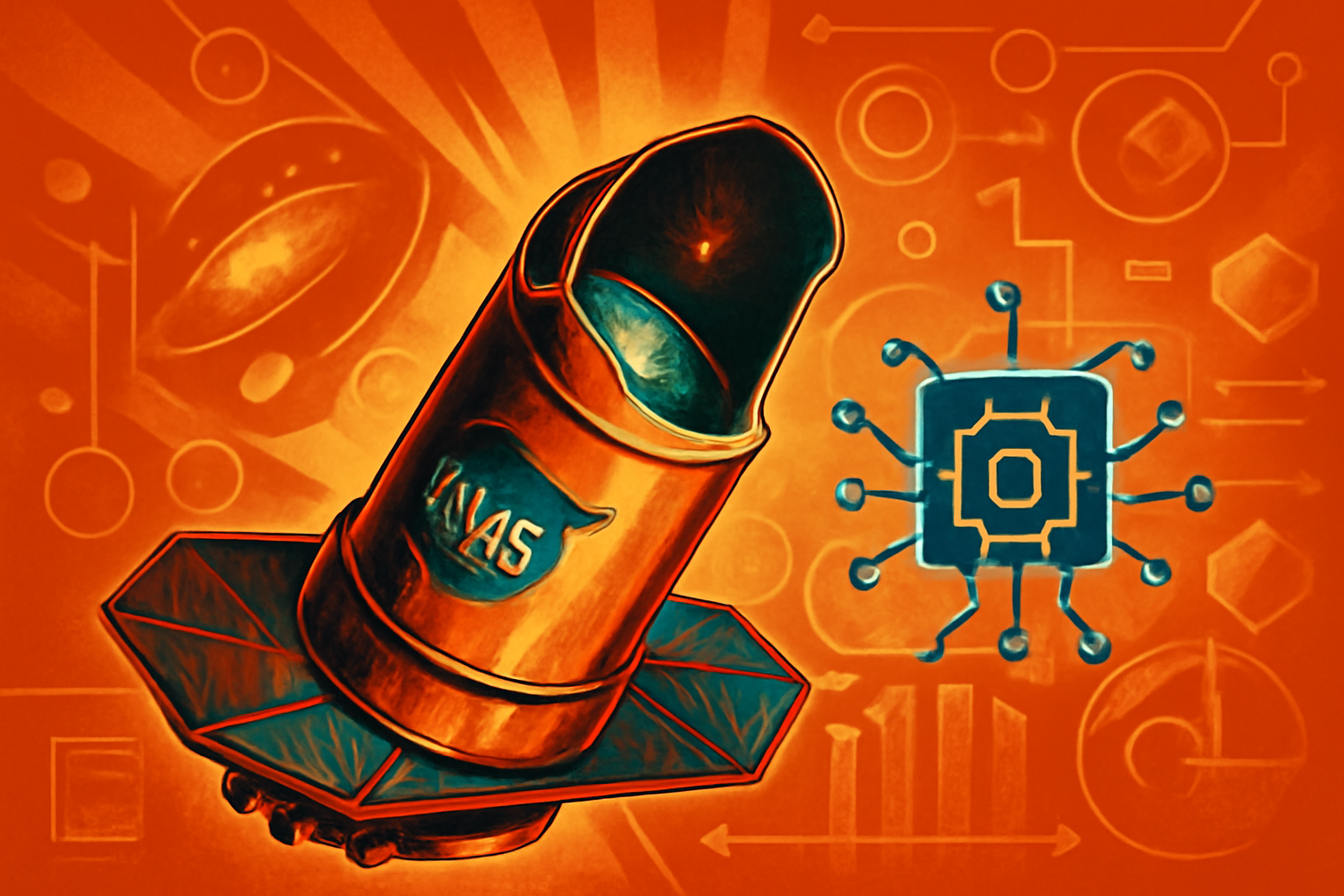
Scientific illustration of the Nancy Grace Roman Space Telescope in deep space surrounded by glowing digital data patterns representing artificial intelligence.
Photo: Kronos Digital News
NASA is equipping the Nancy Grace Roman Space Telescope with advanced artificial intelligence to process astronomical data in real time [1]. These machine learning systems are designed to flag unusual cosmic events and prioritize observations as they happen [1].
The telescope will also use these AI tools to simulate galaxy evolution, representing a shift in how agencies perform deep-space exploration [1]. By processing massive datasets immediately, the mission aims to accelerate the pace of cosmic discovery [1].
Editorial notes
Transparency note
AI assisted drafting. Human edited and reviewed.
- AI assisted
- Yes
- Human review
- Yes
- Last updated
Risk assessment
Risk level set to high because the story is based on a single source domain, failing the requirement for three independent domains to verify claims.
Sources
Related stories
View all

Topics
About the author
Kronos Digital News Desk covers advancing deep-space machine learning and editorial analysis for Kronos Digital News.