
Accelerating Life Science Research
OpenAI Debuts GPT-Rosalind for Faster Drug Discovery
New life sciences AI model aims to revolutionize biochemistry and genomics through advanced reasoning capabilities.
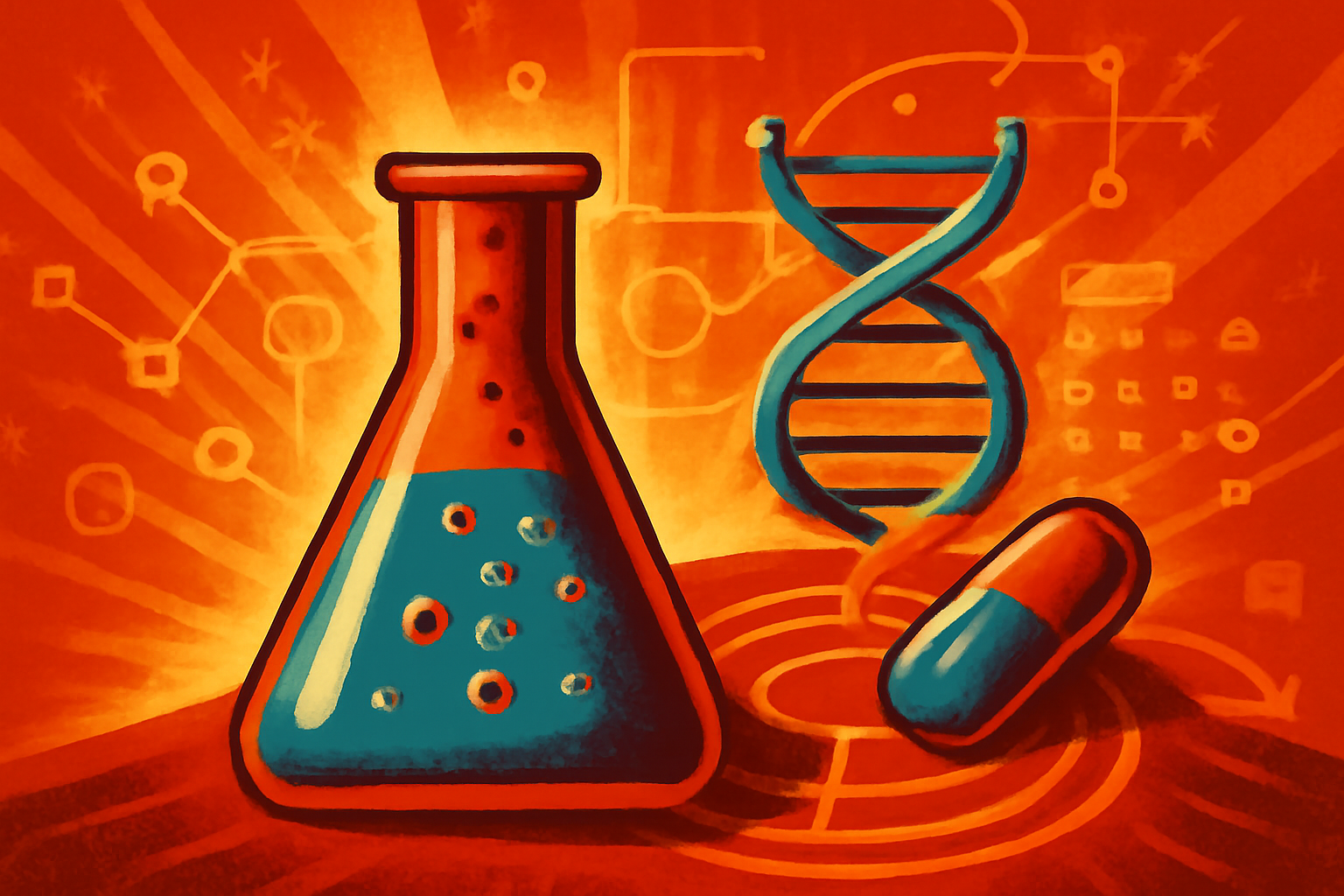
A digital 3D model of a DNA strand integrated with glowing light points representing artificial intelligence and data nodes.
Photo: Kronos Digital News
OpenAI introduced GPT-Rosalind on April 19, 2026, marking its first specialized reasoning model for the life sciences sector [1]. The tool focuses on biochemistry, genomics, and protein engineering to help researchers synthesize evidence and generate fresh hypotheses [1][3]. Researchers intend to use the model to shorten drug development timelines [1]. Initial partners utilizing the platform include pharmaceutical leaders Amgen and Moderna, alongside the Allen Institute [1][3]. This move represents the company's first purpose-built model for a specific industry [3]. By targeting biotech, OpenAI seeks a larger share of the enterprise pharmaceutical market [2][3].
Editorial notes
Transparency note
Drafted with LLM; human-edited
- AI assisted
- Yes
- Human review
- Yes
- Last updated
Risk assessment
Reviewed for sourcing quality and editorial consistency.
Sources
- 1.↗
fiercebiotech.com
https://www.fiercebiotech.com/biotech/openai-launches-biotech-specific-ai-model-gpt-rosalind
- 2.↗
vertexaisearch.cloud.google.com
https://vertexaisearch.cloud.google.com/grounding-api-redirect/AUZIYQEYYaYJmCtH4b33iwkTAh_GEafyH5NQi2p0mPk_N6o5SGT04Vn9zJxSEcTiUymKGQcusODlC6uaWA4uvLVlRqJqr74YN19QIiG47jzMZRRv7ZvWpkLV-431P3KlkHFFnQEotNnN7mYE-7Huj7lyU-emzZSFUh5xV8O1ijrQPpfhcS2JJ8giVJDObOa8Aow==
- 3.↗
pymnts.com
https://www.pymnts.com/artificial-intelligence-2/2026/openai-targets-pharma-giants-with-purpose-built-ai-model/
Related stories
View all


Topics
About the author
Kronos Digital News Desk covers accelerating life science research and editorial analysis for Kronos Digital News.