
Penn State Researchers Create DNA Bio-Hybrid Memory
New device uses 100 times less power than traditional electronics by combining synthetic DNA with semiconductors.
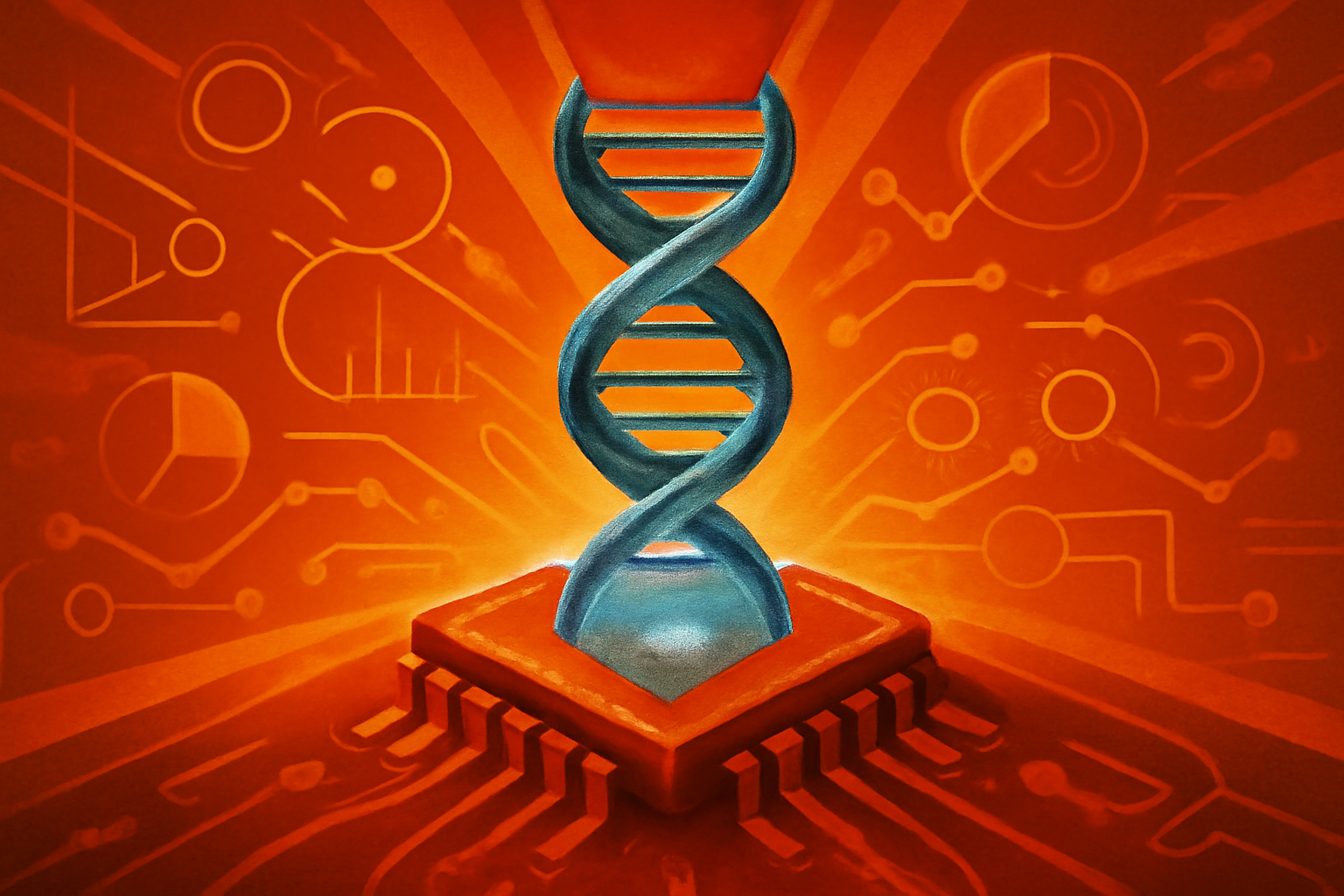
A conceptual macro image of a computer chip integrated with glowing DNA strands, representing bio-hybrid memory technology.
Photo: Kronos Digital News
Researchers at Penn State have developed a bio-hybrid memory device that integrates synthetic DNA with semiconductor technology [1]. This breakthrough allows the device to consume 100 times less energy than standard electronic components [2]. The system functions by storing and processing data in the same physical location [1].
This in-memory computing approach mimics biological processes to reduce data transfer bottlenecks [3]. By localizing tasks, the hardware avoids the power drain found in traditional computer architectures [2]. These efficiency gains could significantly lower the carbon footprint of future artificial intelligence systems [1].
The hybrid design uses DNA molecules to maintain information states without the constant electrical refresh cycles required by modern RAM [3]. Scientists believe this technology marks a major step toward sustainable, high-performance computing [1].
Editorial notes
Transparency note
AI assisted drafting. Human edited and reviewed.
- AI assisted
- Yes
- Human review
- Yes
- Last updated
Risk assessment
Reviewed for sourcing quality and editorial consistency.
Sources
- 1.↗
sciencedaily.com
https://www.sciencedaily.com/releases/2026/08/260816044853.htm
- 2.↗
positron.today
https://positron.today/posts/2026-08-17-scientists-turn-dna-into-a-memory-device-that-uses-100x-less/
- 3.↗
robotics.ee
https://robotics.ee/2026/08/17/scientists-turn-dna-into-a-memory-device-that-uses-100x-less-power/
Related stories
View all
About the author
Kronos Digital News Desk covers news and editorial analysis for Kronos Digital News.