
Penn State Unveils Ultra-Low-Power DNA Memory for AI
Researchers fuse synthetic DNA and semiconductors to slash AI energy use by 100 times, mimicking brain plasticity.
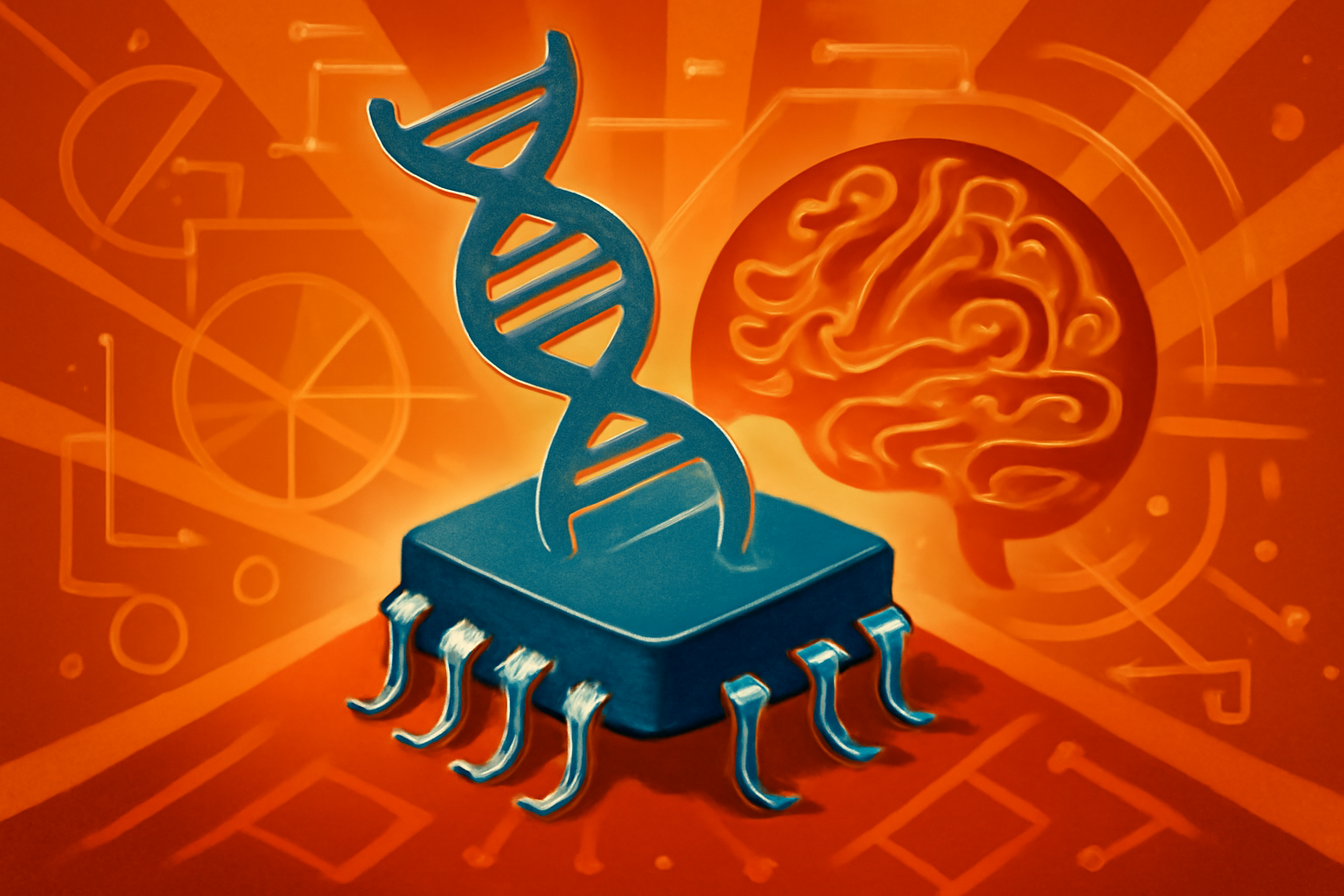
A macro view of a bio-hybrid memristor chip showing synthetic DNA strands integrated with a perovskite semiconductor material.
Photo: Kronos Digital News
Scientists at Penn State have built a new bio-hybrid memory device that fuses synthetic DNA with perovskite semiconductors [1][2]. This "memristor" mimics the neural plasticity found in the human brain to process data more efficiently [1]. It aims to support the massive energy needs of modern AI systems and global data centers [2].
The device consumes 100 times less power than conventional storage technologies currently in use [1][3]. By using biological materials, researchers are exploring what some call the holy grail of sustainable data storage [3]. This approach could significantly reduce the environmental impact of AI training and inference tasks [2].
Editorial notes
Transparency note
AI assisted drafting. Human edited and reviewed.
- AI assisted
- Yes
- Human review
- Yes
- Last updated
Risk assessment
Reviewed for sourcing quality and editorial consistency.
Sources
- 1.↗
sciencedaily.com
https://www.sciencedaily.com/releases/2026/08/260816044853.htm
- 2.↗
psu.edu
https://www.psu.edu/news/research/story/borrowing-biology-power-next-gen-data-storage
- 3.↗
techradar.com
https://www.techradar.com/pro/nature-has-the-solution-researchers-fuse-dna-and-silicon-to-build-holy-grail-of-memory-storage
Related stories
View all


About the author
Kronos Digital News Desk covers news and editorial analysis for Kronos Digital News.