
Advancing Brain-Machine Interface Technology
Printed Artificial Neurons Activate Living Brain Cells
Northwestern University engineers develop low-cost, flexible neurons that communicate with human biology.
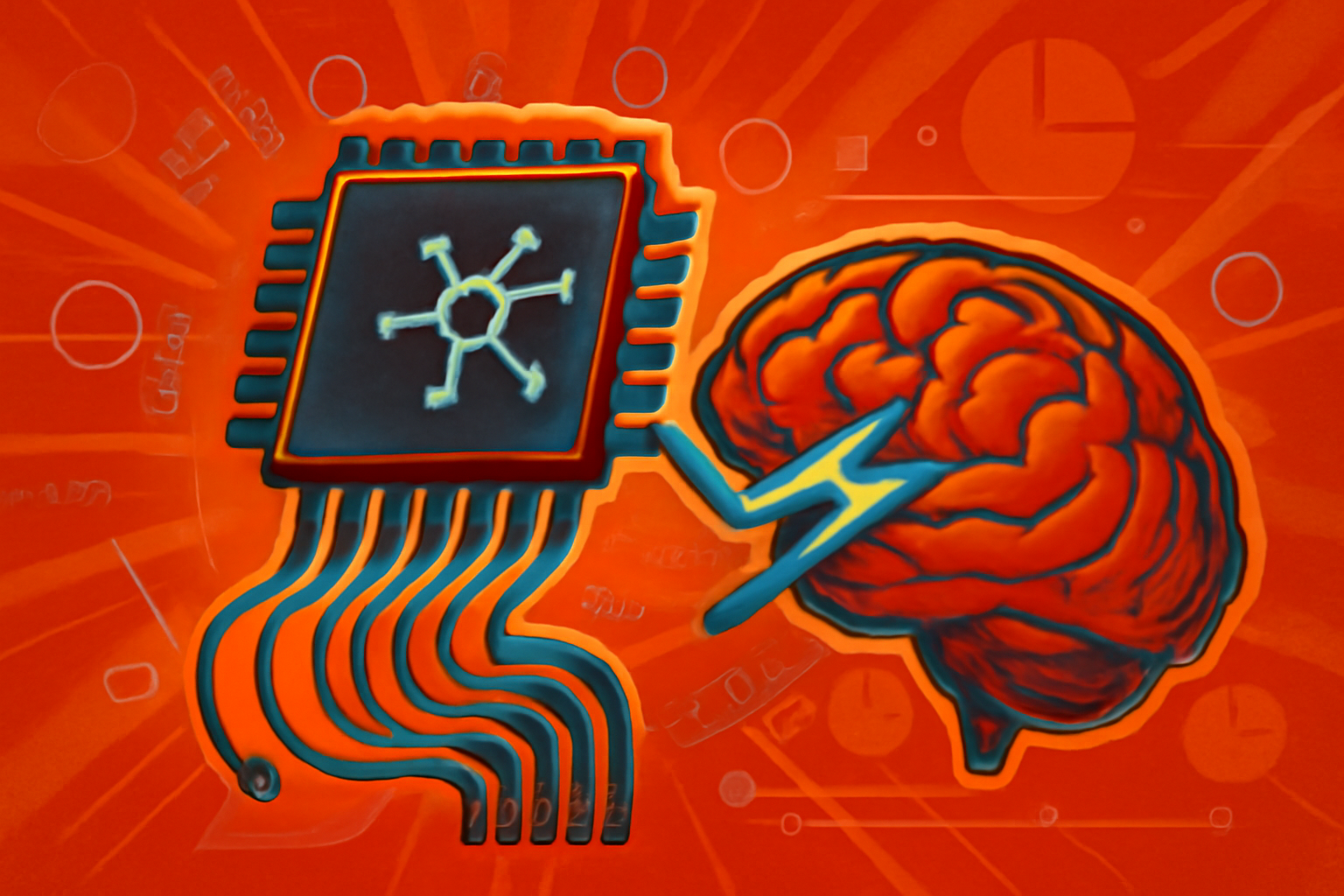
A flexible electronic circuit with glowing blue pathways representing a printed artificial neuron designed to interface with biological cells.
Photo: Kronos Digital News
Engineers at Northwestern University have developed flexible, low-cost printed artificial neurons that generate lifelike electrical signals [1]. These synthetic components successfully activated real brain cells, representing a major milestone in biotechnology [1][2]. The devices are designed to mimic the complex communication methods found in natural biological systems [2].
This breakthrough facilitates a new level of integration between machines and human biology [3]. By using inexpensive printing methods, the researchers have made these advanced neural interfaces more accessible for future medical applications [1]. The project aims to bridge the gap between synthetic electronics and living tissue through seamless signal transmission [2][3].
Editorial notes
Transparency note
AI assisted drafting. Human edited and reviewed.
- AI assisted
- Yes
- Human review
- Yes
- Last updated
Risk assessment
Reviewed for sourcing quality and editorial consistency.
Sources
- 1.↗
sciencedaily.com
https://www.sciencedaily.com/releases/2026/04/260417225020.htm
- 2.↗
poseidon-us.com
https://poseidon-us.com/2026/04/18/artificial-neurons-successfully-communicate-with-living-brain-cells/
- 3.↗
vertexaisearch.cloud.google.com
https://vertexaisearch.cloud.google.com/grounding-api-redirect/AUZIYQFyNtncWS-cTOJVpJ_7HI4vw9S0CBBvQm1KBqYzgJONYpSg1CCbP5cdox-2cL1WfJ52RcC83VuGBPnx5H9fQksb69XdBwvGnMy-59vShdxIFE7OBZQRa9Xmm_ItgqqfQAXGFCBOlIP1yU9ODMUrf6vTlGd8vP91Tl92Z8oDlx40jeD8=
Related stories
View all


Topics
About the author
Kronos Digital News Desk covers advancing brain-machine interface technology and editorial analysis for Kronos Digital News.