
Scaling Simulation-to-Reality Training
Robotics Evolves into ‘Physical AI’ at CES 2026
Integration of generative AI and virtual simulations allows machines to master complex real-world tasks.
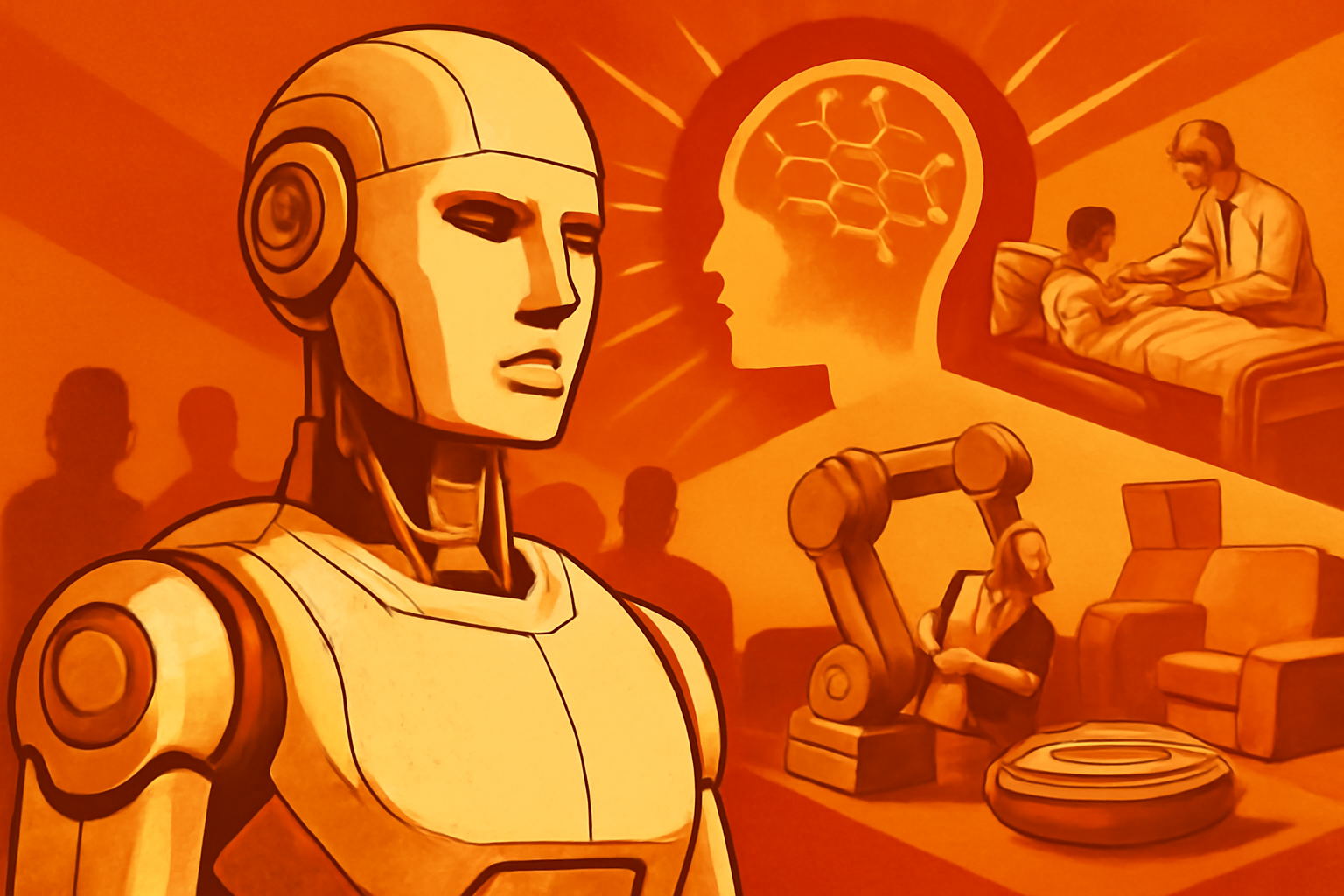
A sophisticated humanoid robot stands in a futuristic laboratory, surrounded by holographic data projections and modern industrial equipment.
Photo: Kronos Digital News
Robotics entered a new frontier as "physical AI" during the 2026 Consumer Electronics Show [1][2]. These advanced machines now integrate generative and analytical AI to learn through high-fidelity virtual simulations [1][5]. This shift allows robots to master movement and logic before physical deployment [3]. Industries including medical, industrial, and residential sectors are rapidly adopting these autonomous systems [1][4]. Leading innovators like Nvidia and Hyundai showcased robots that perceive, reason, and act in dynamic environments [2][4]. This marks a transition from rigid programming to experience-based learning across the global tech landscape [3][5].
Editorial notes
Transparency note
Drafted with LLM; human-edited
- AI assisted
- Yes
- Human review
- Yes
- Last updated
Risk assessment
Reviewed for sourcing quality and editorial consistency.
Sources
- 1.↗
forbes.com
https://www.forbes.com/sites/physical-ai-made-waves-at-ces-2026-what-is-it/
- 2.↗
counterpointresearch.com
https://www.counterpointresearch.com/insights/ces-2026-robotics-announcements-recap/
- 3.↗
hyundainews.com
https://www.hyundainews.com/en-us/releases/ces-2026-physical-ai-announcements
- 4.↗
www2.deloitte.com
https://www2.deloitte.com/us/en/insights/focus/tech-trends/2026/physical-ai-robotics.html
Related stories
View all


Topics
About the author
Kronos Digital News Desk covers scaling simulation-to-reality training and editorial analysis for Kronos Digital News.