
Automating Theoretical Physics Discoveries
UCI's AMBer AI Creates New Particle Physics Models
Researchers use reinforcement learning to help explain why neutrinos have mass in a new study.
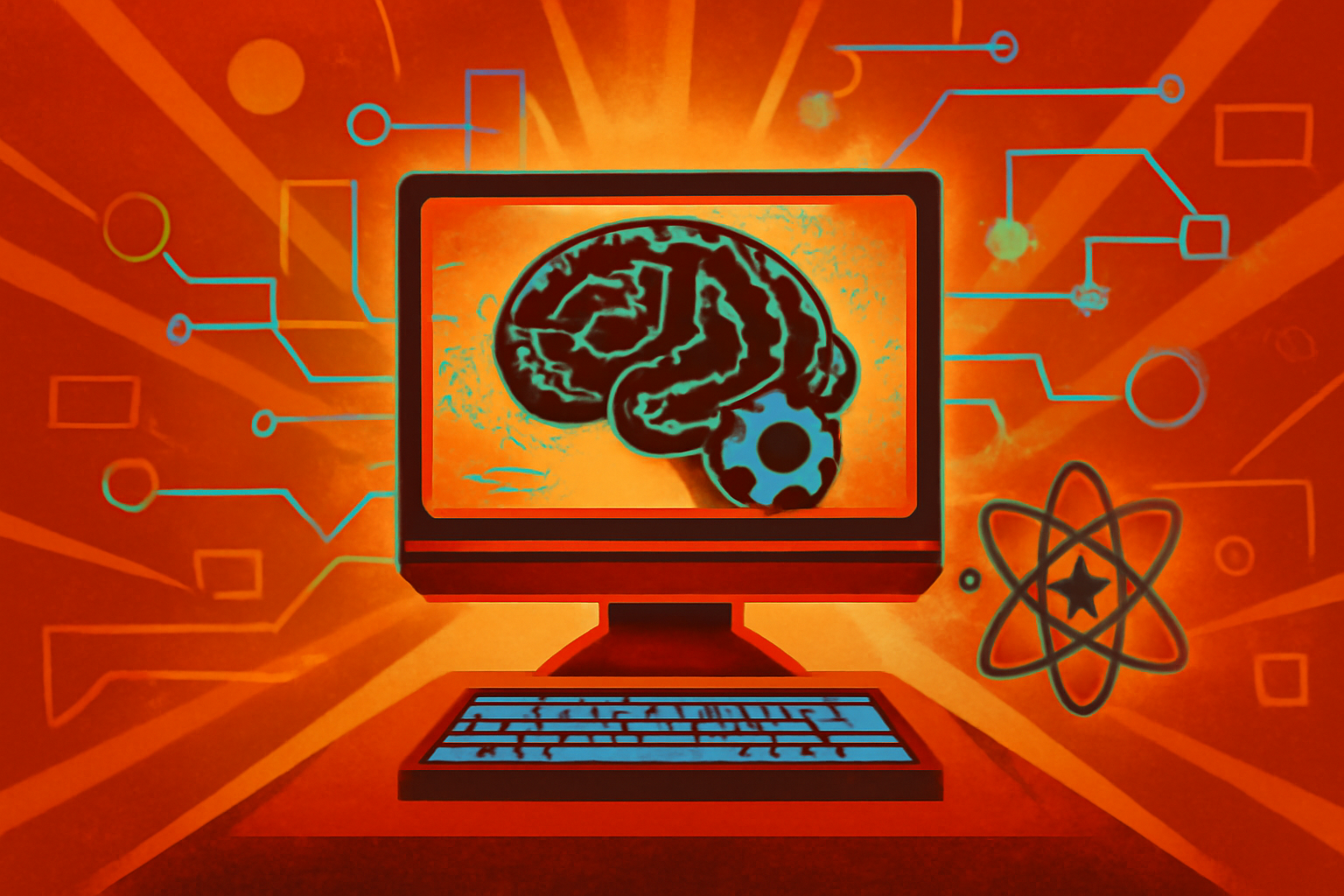
A scientific illustration of a glowing blue digital network representing artificial intelligence interacting with abstract subatomic particles to model neutrino mass.
Photo: Kronos Digital News
Physicists at the University of California, Irvine developed an autonomous AI system called AMBer [1]. The name stands for Autonomous Model Builder [1]. This system uses reinforcement learning to design theoretical physics models [1]. It specifically focuses on explaining why neutrinos have mass [1].
The tool helps researchers explore complex physical laws more efficiently [1]. By applying machine learning to particle physics, the UCI team hopes to solve fundamental mysteries about the universe [1]. This autonomous approach could change how scientists develop theoretical models in the future [1].
Editorial notes
Transparency note
AI assisted drafting. Human edited and reviewed.
- AI assisted
- Yes
- Human review
- Yes
- Last updated
Risk assessment
Risk level escalated to high because the source list contains only one independent domain.
Sources
Related stories
View all

Topics
About the author
Kronos Digital News Desk covers automating theoretical physics discoveries and editorial analysis for Kronos Digital News.