
Bio-Hybrid DNA Chip Cuts AI Energy Use by 100x
Penn State researchers combine synthetic DNA and semiconductors to create ultra-efficient memory for AI systems.
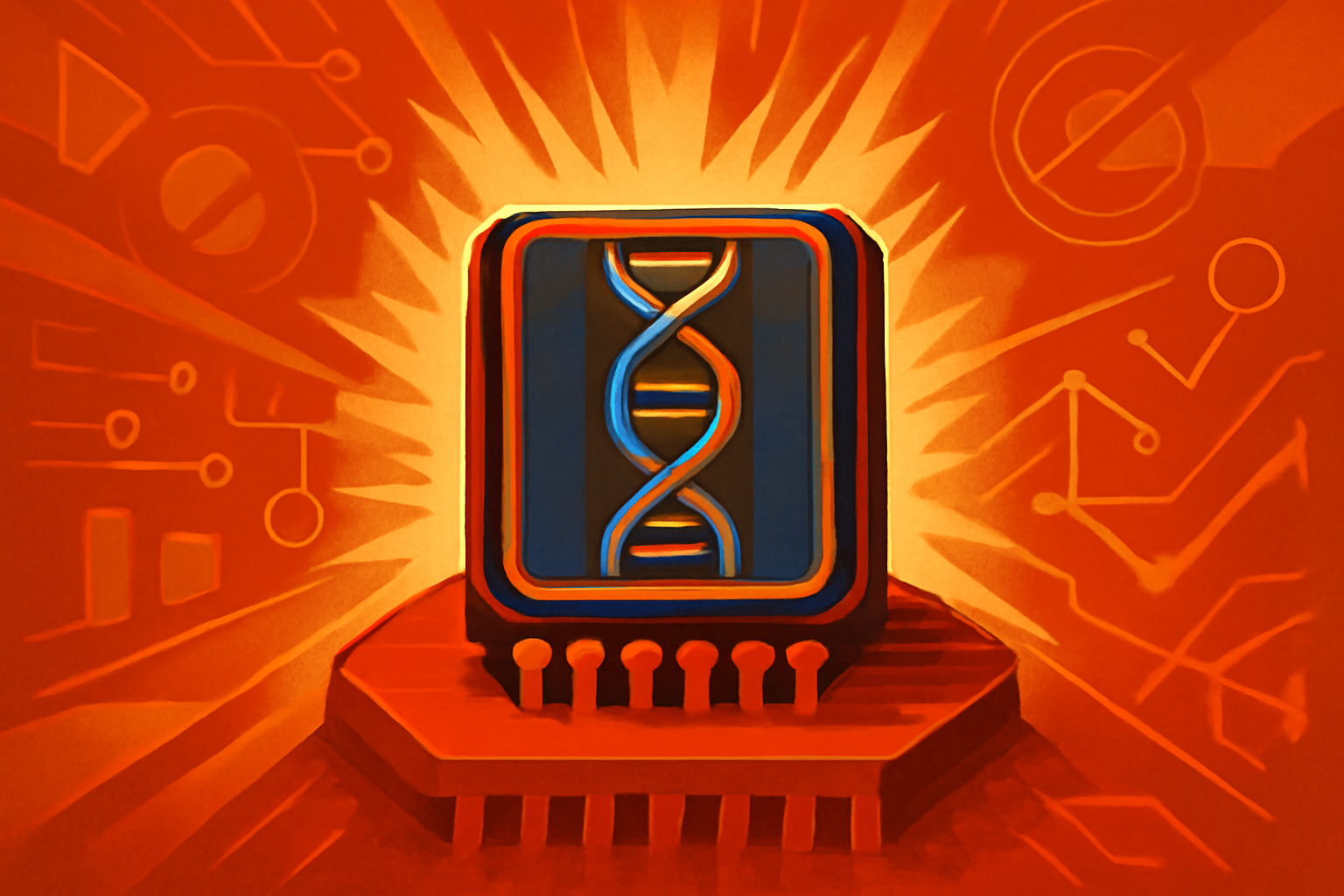
A conceptual macro image showing a futuristic computer chip where iridescent semiconductor crystals are intertwined with glowing, organic DNA strands to represent bio-hybrid technology.
Photo: Kronos Digital News
Researchers at Penn State created a bio-hybrid memory device using synthetic DNA and perovskite semiconductors. This breakthrough uses 100 times less power than traditional storage technologies [1]. The technology mimics biological neurons by processing and storing data in the same location [2].
By integrating organic DNA with inorganic semiconductors, the team built a functioning memristor [2]. This design addresses the rising energy demands of large-scale artificial intelligence systems [3]. Current computing models often struggle with high electricity consumption and heat generation.
This bio-hybrid approach offers a pathway to sustainable hardware. Future versions could revolutionize computing by merging biological efficiency with electronic speed [1]. The study highlights a shift toward biologically inspired architecture in hardware design [3].
Editorial notes
Transparency note
AI assisted drafting. Human edited and reviewed.
- AI assisted
- Yes
- Human review
- Yes
- Last updated
Risk assessment
Reviewed for sourcing quality and editorial consistency.
Sources
- 1.↗
sciencedaily.com
https://www.sciencedaily.com/releases/2026/08/260816044853.htm
- 2.↗
eletimes.ai
https://www.eletimes.ai/dna-powered-memory-could-cut-computing-energy-use-by-100x
- 3.↗
inshorts.com
https://inshorts.com/en/amp_news/scientists-turn-dna-into-memory-device-that-uses-100x-less-power-1787036719177
Related stories
View all
About the author
Kronos Digital News Desk covers news and editorial analysis for Kronos Digital News.