
AI Systems Biology Reshapes Drug Discovery
New AI models shift focus to biological complexity to reduce high clinical failure rates in pharmacology.
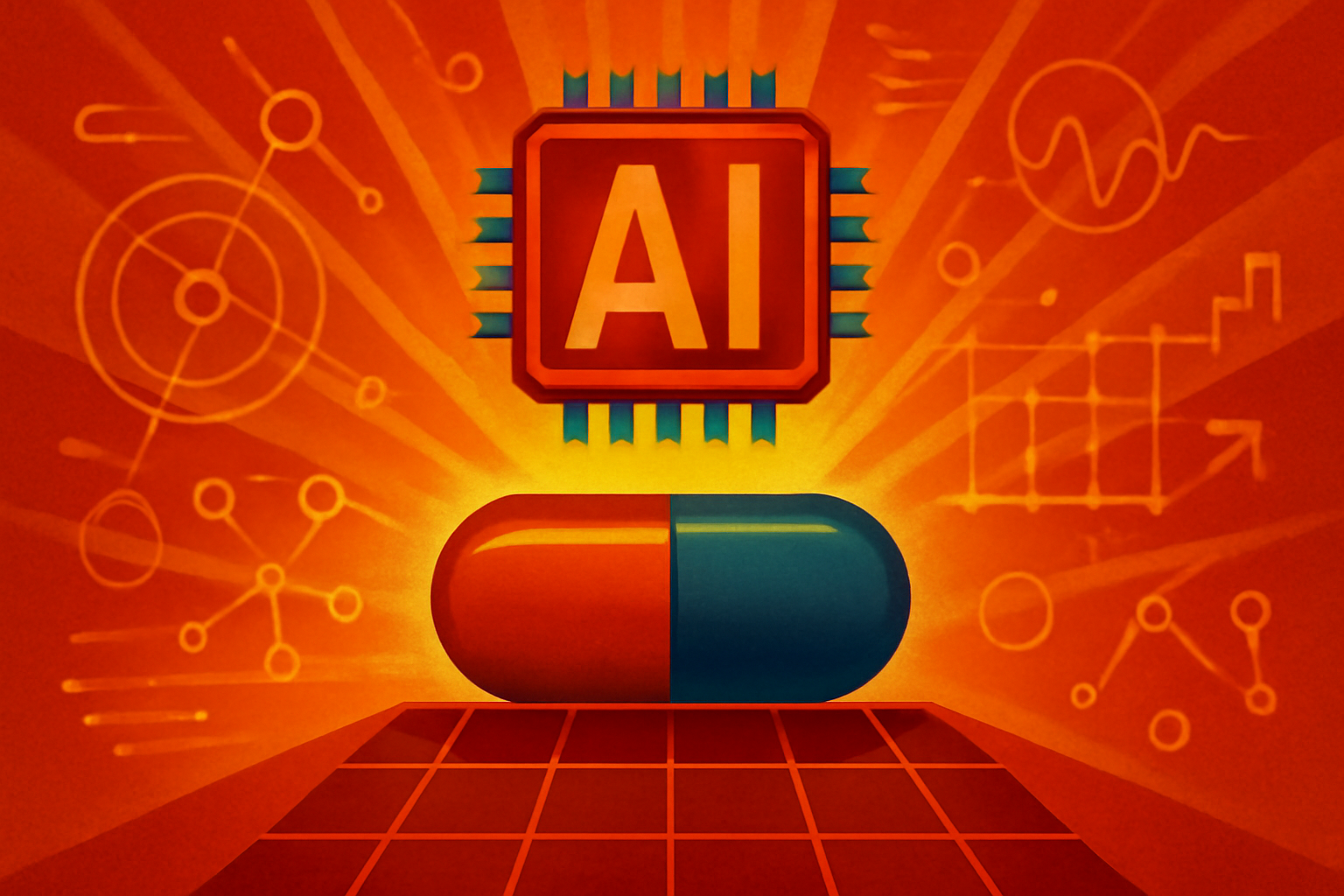
A digital visualization of complex molecular structures and neural network pathways representing AI in systems biology.
Photo: Kronos Digital News
Artificial intelligence is transforming drug development through systems biology. Experts indicate the technology now focuses on complex disease drivers [1]. This shift moves beyond simply finding drugs faster. It aims to address high clinical failure rates by understanding intricate biological interactions [1].
The European Commission’s Joint Research Centre highlights new biological AI paradigms [2]. These models leverage the "languages of life" to model cellular processes. This approach helps scientists identify how diseases progress at a molecular level [2].
Pharmacology now uses these tools to reset drug development timelines [1]. By simulating biological systems, researchers can better predict drug efficacy. This strategy targets the root causes of diseases instead of treating only symptoms [1][2].
Editorial notes
Transparency note
AI assisted drafting. Human edited and reviewed.
- AI assisted
- Yes
- Human review
- Yes
- Last updated
Risk assessment
The story relies on only two independent sources rather than the recommended three-source minimum.
Sources
- 1.↗
drugtargetreview.com
https://www.drugtargetreview.com/home/how-ai-driven-systems-biology-will-reset-the-starting-line-for-drug-development/2136278.article
- 2.↗
joint-research-centre.ec.europa.eu
https://joint-research-centre.ec.europa.eu/jrc-news-and-updates/biological-ai-models-new-paradigms-leverage-languages-life-2026-08-24_en
Related stories
View all

About the author
Kronos Digital News Desk covers news and editorial analysis for Kronos Digital News.